|
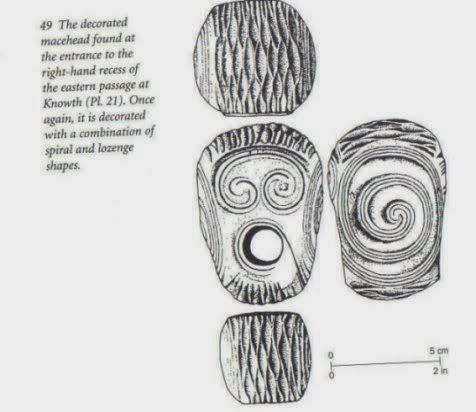
| Knowth Mace Head recreated by Cole in Tinkercad and printed by Stratasys. |
 |
| A globe of cranes created by Emily in Tinkercad and printed by Stratasys. |
It is an exciting time to be entering the 3D design space in K-12 education as there are so many opportunities now for youth. I began teaching Tinkercad and 3D printing in November of 2013 (when I purchased my Afinia 3D printer off of Craigslist) and I have enlisted both my children to assist me in teaching the workshops I have taught in
museum and library spaces. When I learned of the
Stratasys Extreme Redesign Challenge, I asked my kids if they wanted to apply and I shared this design challenge with their teachers.
It was wonderful and exciting news to find out that both Cole and Emily ended up in the top
10 in the Art & Architecture category of the design challenge for 2014. There were over 600 entrants from 12 nations. This is the 10th year of the Stratasys Extreme Redesign Challenge.
 |
| Cole with his Knowth Mace Head design in Tinkercad. |
 |
| Cole's mace head being designed in Tinkercad. He made some pieces in Illustrator and imported these into Tinkercad as .svg files. |
 |
| Knowth Mace Head created by Cole Takara in Tinkercad. |
 |
| Emily with a paper crane she made that inspired the 3D designed ones she created in Tinkercad. |
|
 |
| "World of Peace" created in Tinkercad by Emily Takara. |
The design challenge required a written component. Below are the statements for Cole and Emily's designs.
Cole’s
statement for Knowth Mace Head:
“Ireland has a very interesting history beginning in
the Neolithic Ages, and last summer I got to see it first-hand. In
Ireland there were a lot of amazing sites and things to see, but by far the
most interesting was what archaeologists have uncovered about Ireland's past.
Archaeologist have found many Neolithic works, ranging from flint arrowheads to
the giant Neolithic tombs like Newgrange. Archeologists have made some
amazing discoveries in Ireland, not in the least the Knowth Mace Head. The
Knowth Mace Head is a piece of flint carven into a small face. Nobody knows
what it was for although archaeologists believe it was used for religious practices.
Amazingly, archaeologist think that these early Neolithic people actually use a
primitive drill to make intricate swirls on the surface.
Inspired by the brilliance of these early people, I
decided to make my own version of this early artwork using modern day
technology like 3D designing. Using a free cloud website called Tinkercad and
Adobe Illustrator, I was able to create my best impression of this early art
piece using modern day technology. It was so cool to interpret with modern 21st
Century tools something originally designed with early Neolithic technology.
This piece to me symbolizes technology throughout the epochs of history.”
Emily’s
statement for a World of Peace:
“This
object represents the story of a Japanese girl named Sadako and the thousand
paper cranes she tried to make. Sadako got leukemia in World War II when a bomb
fell near her house, and she got placed in the hospital. Sadako was intent on
living so she started to make paper cranes. She wanted to make 1,000 paper
cranes because she believed in the old Japanese legend that the gods would heal
anyone who made 1,000 paper cranes.
She
only made 644 paper cranes before she died, but I think Sadako showed great
strength and inspired others. In her own personal struggle she symbolized the
need of worldwide peace. I think she symbolizes that peace on earth is better
than war and fighting. She was spreading her own message of peace, too. Sadako
is a true figure of peace.
My paper cranes are in a sphere because the sphere represents the Earth and
Sadako spreading the message of peace around the world. I believe that 3D
printing is an example of very new technology that could be used to help
injured or special people. This new technology could also be used for bad
things. The memory and message of Sadako can help us focus on using 3D printing
for good uses.”
 |
| Emily and Cole |