Showing posts with label 3D printing. Show all posts

Tuesday, September 30, 2014

Teen 3D Printing Calaveras de Azucar workshops in East San Jose


Three teen designed calaveras de azucar printed in glow-in-dark-filament
It has been a fun experience to design and conduct 3D printing workshops that celebrate the holiday of Dia de los Muertos in the medium of 3D printing. The second of these two free teen workshops will be conducted on October 2nd (4:00-5:30pm) at the Dr. Roberto Cruz Library. The project is designed to engage teens in 3D printing and honoring a loved one through 3D art and writing.

Their written statements will be displayed in the library installation along with their 3D prints. I am printed the designs on my Afinia printer and the Sunnyvale Library is helping me by printing five of the calaveras. The skull we are using is here on Tinkercad. All the students' designs are in Tinkercad under hashtag #sugarskull. The lesson plan can be found here at this link and on my Instructable posting.

I dreamed up this project a year ago after attend my first 3D printing conference and purchasing a used 3D printer off of Craigslist. A few weeks ago, Afinia posted a blog story on my short journey in 3D printing.
A student explores negative shapes in Tinkercad as he builds his calavera honoring family members.
Print hot off the printer with supports still on.
Some of the participants in the first workshop in the computer lab.
A student builds her design to honor her grandmother.
An early print fail.
A sample skull design printed in glow-in-the-dark filament


Thursday, September 4, 2014

Participating in Particle Dress Crowd-Source 3D Printing Project

3D printed particles we printed and submitted for the Particle Dress.
It was exciting to find out about the Open Source Element Dress project on Twitter late last week.
This crowd sourced project created by artist Anouk Wipprecht invites a global public to participate in creating 3D elements that will become a part of a 3D printed illuminated garment for Vienna Fashion Week.

Ms. Wipprecht has posted the base particles elements that one can modify on Tinkercad.
Here are the guidelines and instructions for submission on Instructable and the project's Facebook page. You can see the growing body of particles people are creating here at this link.

I think it is wonderful that the project invites participants to look at Ernst Haeckel's work for inspiration, particularly his illustrations for Kunstformen der Natur.

Realizing how little time we had to participate, I got my daughter, sister, son and neighbor's daughter to design particles to 3D print in my garage this past weekend. Here are the designs below. We used an Afinia 3D printer and an array of ABS filament colors, including glow-in-the-dark filament.
Emily's design in the works.

Emily's design in Tinkercad

Emily with her printed particle for the dress.

Emily's second particle element with the rafts still on.

Trisha's particle printed. This was her first project in Tinkercad and her first experience 3D printing!

Particle created by Cole. He created it in Sculptris, took it into Netfabb to clean up triangle mesh, and then imported the .stl file into Tinkercad for the final piece. He made this on Sept. 7th so we were we not able to print it to submit, but hopefully, the project will be printing it.

My sister, Lisa's design in Tinkercad. She created shapes in Illustrator and brought them into Tinkercad as a .svg file.

Lisa's printed particle.
A particle I created.


Wednesday, April 30, 2014

3D Printing Mobile Cart out on the street

Last Sunday my son and I had a blast engaging the public in 3D printing via our mobile cart. We stationed ourselves next to Roy's Station in San Jose's Japantown during the Nikkei Matsuri festival and printed out netsuke. Here is a link to our photos and an article in the Mercury News mentioned our 3D printing pop-up event.

Tuesday, April 22, 2014

3D printing mobile maker cart prep work almost completed

T-shirt design by Cole for workshop
This coming Sunday my children and I will be engaging the public in 3D printing via a mobile maker cart in San Jose's Japantown. I am working on a website for the project as I will be engaging students in this activity in the coming school year. Here is the project site in the works. Here are the netsuke designs we have created in Tinkercad and hopefully more will be added to this collection on Sunday if visitors wish to explore making their own designs in Tinkercad.

Sample glow in the dark netsuke
It was very interesting to read information about netsuke on the Metropolitan Museum of Art website: http://www.metmuseum.org/toah/hd/nets/hd_nets.htm. I learned that because there was a great deal of regulation of Japanese clothing according to rank and station, the netsuke was a way for the rising merchant class to display their wealth. Since these small purse counterweights could be easily hidden, netsuke could be a whimsical outlet for themes and motifs that ran counter to the officially sanctioned cultural norms of the Edo period.

Thursday, April 17, 2014

Netsuke 3D printing with a mobile maker cart

On April 27th we will be bringing a 3D printing mobile maker cart to Japantown in San Jose and setting up next to Roy's Station on 5th and Jackson. We will be 3D printing small objects, Japanese netsuke, for the public (free). A laptop will also be set up for visitors who wish to explore designing their own netsuke in Tinkercad. Here is a past blog posting on this project.
Cherry blossom design created in Tinkercad.
Mouse netsuke created and shared in Tinkercad.
Sketch for the pop up event's T-shirt design. by Cole (14 yrs old)
With the help of Melinda Po, I conducted a trial run of printing from the cupcake maker cart on site in Japantown, San Jose.
Glow in the dark cherry blossom printed from maker cart.

Sunday, March 23, 2014

Youth and 3D Printing Design Challenges

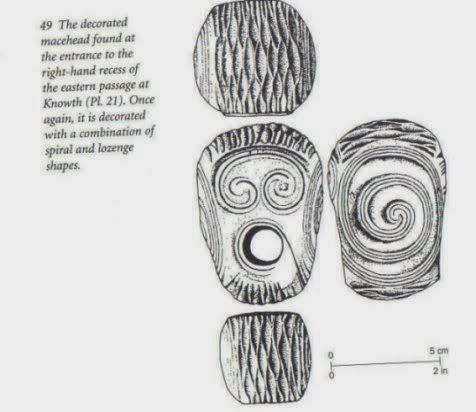
Knowth Mace Head recreated by Cole in Tinkercad and printed by Stratasys.
A globe of cranes created by Emily in Tinkercad and printed by Stratasys.
It is an exciting time to be entering the 3D design space in K-12 education as there are so many opportunities now for youth. I began teaching Tinkercad and 3D printing in November of 2013 (when I purchased my Afinia 3D printer off of Craigslist) and I have enlisted both my children to assist me in teaching the workshops I have taught in museum and library spaces. When I learned of the Stratasys Extreme Redesign Challenge, I asked my kids if they wanted to apply and I shared this design challenge with their teachers.

It was wonderful and exciting news to find out that both Cole and Emily ended up in the top 10 in the Art & Architecture category of the design challenge for 2014. There were over 600 entrants from 12 nations. This is the 10th year of the Stratasys Extreme Redesign Challenge.
Cole with his Knowth Mace Head design in Tinkercad.

reference image of Knowth Mace head from Irish Archaeology .
Cole's mace head being designed in Tinkercad. He made some pieces in Illustrator and imported these into Tinkercad as .svg files.

Knowth Mace Head created by Cole Takara in Tinkercad.
Emily with a paper crane she made that inspired the 3D designed ones she created in Tinkercad.
"World of Peace" created in Tinkercad by Emily Takara.
The design challenge required a written component. Below are the statements for Cole and Emily's designs.

Cole’s statement for Knowth Mace Head:
“Ireland has a very interesting history beginning in the Neolithic Ages, and last summer I got to see it first-hand.  In Ireland there were a lot of amazing sites and things to see, but by far the most interesting was what archaeologists have uncovered about Ireland's past. Archaeologist have found many Neolithic works, ranging from flint arrowheads to the giant Neolithic tombs like Newgrange.  Archeologists have made some amazing discoveries in Ireland, not in the least the Knowth Mace Head. The Knowth Mace Head is a piece of flint carven into a small face. Nobody knows what it was for although archaeologists believe it was used for religious practices. Amazingly, archaeologist think that these early Neolithic people actually use a primitive drill to make intricate swirls on the surface.  

Inspired by the brilliance of these early people, I decided to make my own version of this early artwork using modern day technology like 3D designing. Using a free cloud website called Tinkercad and Adobe Illustrator, I was able to create my best impression of this early art piece using modern day technology. It was so cool to interpret with modern 21st Century tools something originally designed with early Neolithic technology. This piece to me symbolizes technology throughout the epochs of history.”

Emily’s statement for a World of Peace:
“This object represents the story of a Japanese girl named Sadako and the thousand paper cranes she tried to make. Sadako got leukemia in World War II when a bomb fell near her house, and she got placed in the hospital. Sadako was intent on living so she started to make paper cranes. She wanted to make 1,000 paper cranes because she believed in the old Japanese legend that the gods would heal anyone who made 1,000 paper cranes.

She only made 644 paper cranes before she died, but I think Sadako showed great strength and inspired others. In her own personal struggle she symbolized the need of worldwide peace. I think she symbolizes that peace on earth is better than war and fighting. She was spreading her own message of peace, too. Sadako is a true figure of peace.

My paper cranes are in a sphere because the sphere represents the Earth and Sadako spreading the message of peace around the world. I believe that 3D printing is an example of very new technology that could be used to help injured or special people. This new technology could also be used for bad things. The memory and message of Sadako can help us focus on using 3D printing for good uses.”
Emily and Cole