Showing posts with label Heinlenville. Show all posts

Thursday, January 5, 2012

Studies for Mural Fence Wrap in Japantown San Jose

I am beginning to create studies for a digitally printed fence wrap mural in San Jose, California. I am one of several artists invited by Rasteriods Design to contribute art to this fence which surrounds what was once San Jose's last Chinatown, Heinlenville, and what is today a part of Japantown. We are also looking to incorporate large bold graphics inspired by Studio Cochae.

Incorporated into the pattern designs above are images of actual artifacts (Japanese porcelain bowl and cow bones) dug up in an archeological excavation behind the fence. The cow bone slices are examples of how Chinese re-cut Western meats smaller to incorporate into Chinese cooking. Many fragments of both porcelain and re-cut cow bone were found at the site and graciously lent to me by the Sonoma State Anthropological Studies Center.

Tonight I submitted an application for a Donor Circle for the Arts Grant with Next Vista for Learning to engage youth of the Japantown community in contributing poetry, spoken word and interviews to the project. I envision student works being QR code linked on posters and on the fence wrap itself to connect public with student reflections online.

In this mural concept I am attempting to metaphorically bridge the past with the present and bring the artifacts to life in a modern day context. The girl is dressed in clothing of today and is blowing on a bowl of soup. The bowl in her hand is the pieced together bowl from the bowl fragment in the pattern behind her. The soup she is cooling contains beef broth and it is echoed in the bone pattern visible in the steam and in the child as she drinks it. The steam itself is a connection to the past as it references the incense burned to honor and remember ancestors. On this steam I will be illustrating floating objects representing the life of this community past and present.
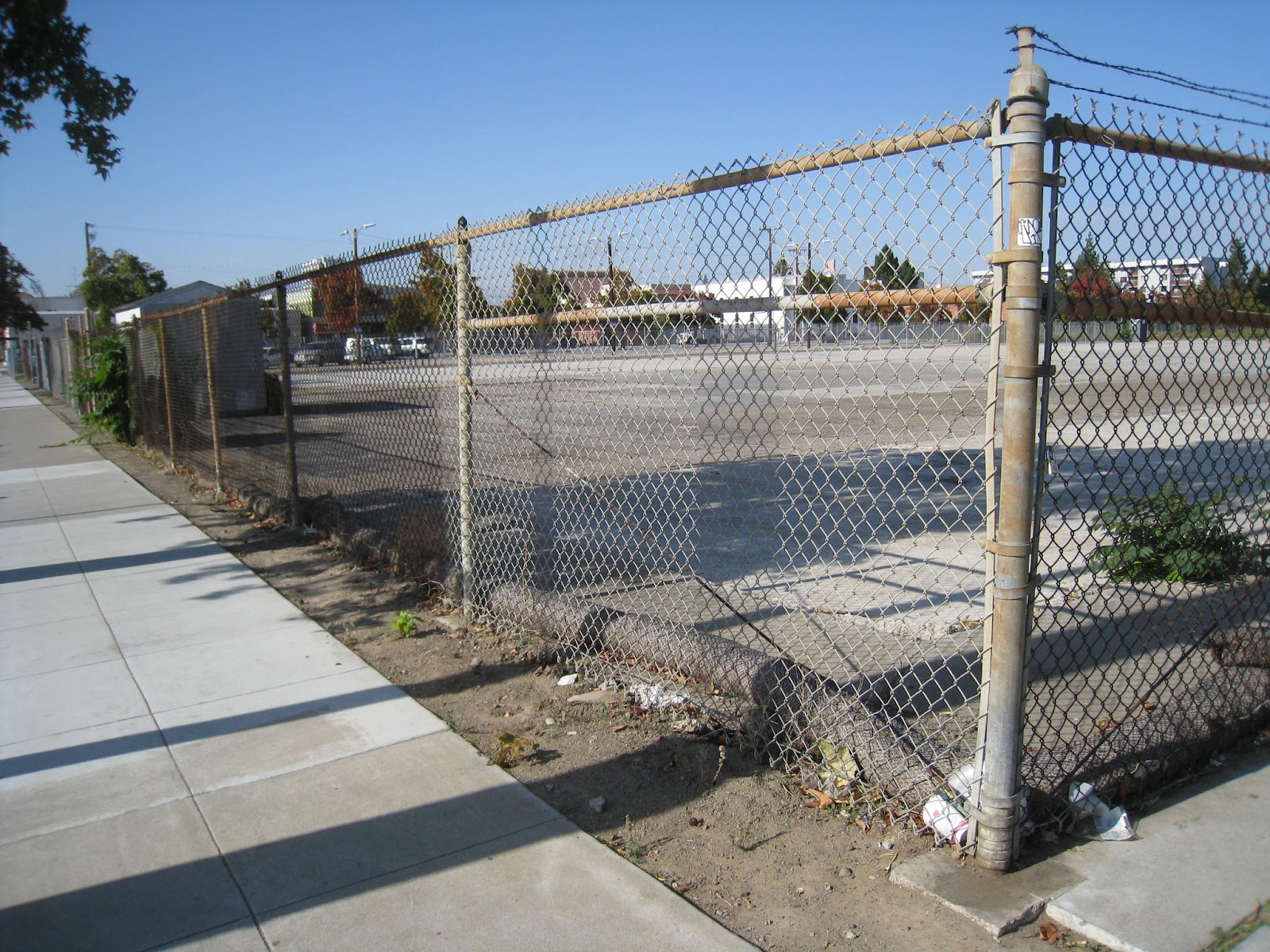
The several blocks of fencing that the fence wrap will encase. Most recently this area was a municipal bus yard. Before that it was Heinlenville, a walled Chinese enclave.


Friday, January 22, 2010

History Animation Curriculum

I have begun to build a website for a social studies student animation. Fourth Grade students at Cureton Elementary will study archeological shards, remnants of a San Jose Chinatown that has been buried under a city bus yard for decades. They will create an animation that explores what they learn. Below is a Google Earth test animation of that illustrations the path from China to San Jose.

The website is here:
http://strawberriesongoldmountain.weebly.com/

Saturday, October 10, 2009

More Fun with Digital Textie Design


Here are more experimenting with digital tiling for textiles. I sent this out to Spoonflower in two different color schemes for fabric swatches in different types of cottons. I also ordered a color chart on different fabrics. You can order the color chart here http://blog.spoonflower.com/2008/05/how-do-i-prepar.html I am still trying to figure out how to download their color chart into my swatches palette in Photoshop.

Below is my pencil sketch of a Chinese peony motif. I designed it to look a bit like flames as I am researching the last of San Jose's six Chinatowns, Heinlenville. It was brick. It was walled and it was locked. It was a unique enclave build by a German immigrant for the Chinese community in response to the arson burnings of other San Jose Chinatowns in the late 1800's. So the hint of flame, for me, alludes to a special community that emerged from the ashes of arson attacks.


I redrew the flower in Illustration incorporating strawberry motifs alluding to the agricultural economy which brought many early immigrants to San Jose. Into the flower, I inserted an image of an actual Chinese coin from Heinlenville that was lent to me by the historian, Connie Young Yu. Her grandparents had a store in this Chinatown. This coin was front her grandma's till box.


A common Japanese sashiko stitch motif was re created in Illustrator and applied in Photoshop to the initial tile image above. Japantown San Jose formed around Heinlenville. Below, De La Rosa peanut candy wrappers were added to the pattern. I spoke with San Jose Latina artist Lydia Sanchez and she told me that this particular candy represented a tangible (and tasty!) tie to her heritage growing up. I visit Mexican markets in San Jose for these yummy treats. Mexicans, Japanese, and Chinese all labored in the strawberry fields of Santa Clara. The final print tile (below and at top) is a blending of three cultures important to the shaping of San Jose's early cultural mix.

I'm working on a grant application relating to this. Here are some thoughts on it:
Textiles anchor us to cultural memories and help shape new identities. This project is rooted in the knowledge that Santa Clara county is the most ethnically diverse county in Northern California. Cultural exchanges and creative cultural blending occurs on a daily basis on many different levels. This project is an opportunity to reflect on the past while shaping a context in which to understand the present and envision the future. Digitally blending cultures and histories into innovative technologically created fabrics invites us to reflect in fresh ways on who we are as a community. These textiles honor the experiences of ethnic groups who shaped the Valley's agricultural past while also celebrate the blending of ethnic groups today and the digital economy driving it.

Tuesday, September 29, 2009

Artifacts from Heinlenville for student animation

It is very exciting to now have a few artifacts on hand to start building the history based animation project. Last weekend my daughter and I attended the Spirit of Japantown Festival in San Jose and met with Connie Young Yu. We were able to look at archeological artifacts from the Heinlenville dig. Connie had the great suggestion that I provide the workshop students with magnifying glasses to get a closer look at the objects. It was a great honor for me to meet Connie Young Yu and I had just completed reading her book Chinatown San Jose, USA. I also read an essay of hers in the book Life along the Guadalupe River- an Archeological and Historical Journey. Her writings bring to life the experiences of early Chinese immigrants in San Jose.


Above: Small poreclain bowls. Collectio
n of Connie Young Yu


Above: Chin
ese and United States coins. These coins were found in the money box from Connie Young Yu's grandparent's store, Quong Wo Chan. Collection of Connie Young Yu


Above and below: Bricks from the Heinlenville archeological excavation. These bricks are from 1887! They were probably created by Chinese labor. The above brick is from the steps of the Ng Shing Gung Temple. There is a recreation of this temple (using many original elemnents) at the San Jose History Park.


The a
bove brick is from 34 Cleveland Avenue, the site of the Quong Wo Chan store.The name of this general store meant Peaceful, Splendid Place.

I look forward to sharing these artifacts with the children.
Below is a more detailed description of this project.

CONCEPT FOR ANIMATION WORKSHOP SERIES:
This workshops series explores the history of San Jose's Heinlenville and Japantown. Students at two Santa Clara County schools will work with clay and paper to recreate archeological dig artifact fragments which they will transform into whole objects. The objects will be animated and transformed to tell an intimate and personal story that brings the history of these communities to life.

HISTORY AND CULTURAL COMPONENT:
Heinlenville was a walled community created in response to arson and was the last of six San Jose Chinatowns. John Heinlen was a German immigrant who established himself in San Jose as a businessman and a farmer. He assiseted the Chinese by building a walled community for them after a sereis of arson attacks reduced thier community to ashes. San Jose's Japantown sprung up to surround Heinlenville. Japantown abruptly disappeared when Japanese Americans were interned during WWII. Japantown emerged again in the same location when some families returned to the area after Internment.
Archeologists form the Anthropological Studies Center at Sonoma State Univeristy and local San Jose historians worked with the Redevelopment Agency of the City of San Jose to unearth selected areas of Helinlenville and early Japantown.

GOAL:
The workshop series will culmulate in five minute films exploring the lives fo Chinese and Japanese people who worked in the agricultural industries of San Jose in the late 1800's to the mid 1900's. The exploration will be accomplished through the study of artifact fragements uncovered in recent excavations. The benefits of the workshop series are:
1. Exposure to the many stepped process of stop motion animation
2. Team Building and problem solving skills through an engaging and fun artistic endeavor
3.Enhancement of visual and verbal communication skills
4. Introduction to archeology through hands-on use of archeological dig artifacts and the reading of archeological research literature.
5. Knowledge of local California history

AUDIENCE REACHED:
This workshop series will be conducted at two schools at far ends of Santa Clara County after Star Testing in May.

At Horace Cureton Elementary School of Alum Rock, San Jose, 84% of the students are Hispanic and many have argricultural labor roots. The family histories of Chinese and Japanese laborers working in the strawberry fields and canneries of the late 1800's to mid 1900's may resonate with the children. This will heighten their cultural understanding and enrich them with the ability to see common threads of experience in different cultures.

At Stevens Creek Elementary School of Cupertino 63% of the students are Asian and many of these are first and second generation Asian American children of highly educated parents working in technology industries. Learing about past Asian immigrants who came to work in very different conditions will increase their appreciation for past immigrant experiences and the ground they paved for future generations.

I am now trying to find funding to bring these workshops to life in the spring. Last year we were able to obtain a grant from the Alum Rock Education Foundation for material costs for my animation workshops at Horace Cureton. I am hoping to identify and target a few more grant sources so that this is not an entirely volunteer endeavor.

Tuesday, August 18, 2009

San Jose History in Animation Workshop


Ever since I read about an archeological excavation of the walled Chinatown of Heinlenville in Japantown, San Jose, I have been brewing ideas on how to explore the amazing rich history of this area in art. At first I conceptualized a dance piece in which I would create the sets from fragments simulation excavation artifacts, but then over the past month or so I have been thinking more along the lines of animation. I teach simple stop motion animation in elementary schools and conducted a few workshops this summer. I now visualize creating a lesson plan that invites the student to look at archeological artifacts and bring them to life through the stories of people who lived in and have memories of Heinlenville and Nihonmachi.

I envision the children creating their animated stories with clay and drawings. Above: I created a rough animated sketch of a bowl fragment becoming a bowl from which strawberry emerge from the porcelain pattern and Chinese workers grow out of the double happiness symbol. Many of the Chinese who came to San Jose worked in the Strawberry fields.


Above: sample shoe box with frame and pottery inside. I envision groups of children creating a shoebox diorama in which the archeological artifacts emerge from the fragments and transform to tell an intimate personal story of past lives in Heinlenville and early Japantown.

It would be fantastic to use actual fragments from the dig as reference images for such transformation sequences. And, of course, there would be music as well as narration which would give more information on the history. I can see a half dozen artifact come to life somehow and offer a small intimate detail of life in Heinlenville or Japantown, little stories that give a taste of life in these communities.

Above is a super rough storyboard I created inspired by a quote I read on a bench in Nihonmachi, San Jose. Narration is by my nine year old son. There are benches throughout San Jose's Japantown etched with quotes from individuals relating stories of the old communities. This quote caught my eye as it talked about children watching a man making noodles by jumping up and down on a pole. I just couldn't visualize this process so I researched it. How do you jump up and down on a bamboo pole? I found this amazing video on bamboo noodle making. It shows how it is done, it takes hours to do and it is both a beautiful and brutal process.

Below: bench in front of the Ken Ying Low building in San Jose's Japantown.